
A new law that defines how companies should process users' data came into force with the President giving assent to the Digital Personal Data Protection (DPDP) Act passed by Parliament in the just-concluded monsoon session. The law arms individuals with greater control over their data while allowing companies to transfer users' data abroad for processing, except to nations and territories restricted by the Centre through notification. It also gives the government power to seek information from firms and issue directions to block content.
The Congress on Monday demanded an independent probe into the issue involving alleged phone tapping of prominent personalities including journalists in India using Israeli Pegasus spyware.

The government on Thursday tabled the Digital Personal Data Protection Bill 2023 in the Lok Sabha with an aim to protect the privacy of Indian citizens, while proposing a penalty of up to Rs 250 crore on entities for misusing or failing to protect digital data of individuals.

Experts suggest that a revamp in the surrounding infrastructure should take care of the issues plaguing the VB-2, stressing that the lightweight nature of the trains is what allows for higher speeds, and that needless design additions may hamper the train's efficiency.

Every week, we bring you fascinating videos, chosen by you, through your likes.

TMC and other opposition party members rushed into the well of the House as Vaishnaw was called to make a statement over the issue.

'Don't want the government to set up a committee on its own'

The first leg of Micron's semiconductor play in Sanand is crucial for the company to sprint towards India's goal of joining the chip race.

Dubey demanded the removal of Tharoor, alleging that he was using his position in a discriminatory manner.

The single-judge bench of Justice Krishna S Dixit which dictated the operative portion of the judgement also imposed a cost of Rs 50 lakh on Twitter and ordered it to be paid to the Karnataka State Legal Services Authority within 45 days.

'Whoever owns the best chip industry will be the Saudi Arabia of the era of data,' predicts Rajeev Srinivasan.

While the market for satellite broadband currently is small, the potential is large as an estimated 30 per cent of the country does not have reliable terrestrial broadband services.

Prime Minister Narendra Modi inaugurated the new Parliament building Sunday morning and installed the scared 'Sengol' in the Lok Sabha chamber, right next to the Speaker's chair, after performing a puja.

US tech giant IBM is betting big on the India growth story and plans to open more software development centres in the country as it looks to partner with the government in its digitisation journey, its chairman and CEO Arvind Krishna said on Friday. On a visit to India, Krishna met Finance Minister Nirmala Sitharaman, Telecom Minister Ashwini Vaishnaw and Minister of State for IT Rajeev Chandrasekhar to discuss deeper collaboration including skilling and workforce development. The firm that originally designed the technology and system behind ATMs, barcodes and the US social security net, is greatly enthused with the speed at which the Indian government is willing to make decisions and where it is moving, he told a select media briefing.

The disruption by Opposition members drew sharp criticism from Prime Minister Modi who accused them of being unable to digest the fact that a large number of new ministers are women, Dalits, tribals and those from other backward classes
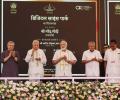
'The situation in India is much more grave and serious than all of us think.' 'That's why it's important to defeat the BJP in 2024.'
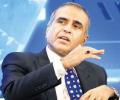
Telecom operator Bharti Airtel Chairman Sunil Mittal on Wednesday said the telecom sector reforms approved by the Cabinet will ensure that the industry is able to invest fearlessly, and the company will respond to Prime Minister Narendra Modi's call to invest and accelerate the country's growth. Among a series of breathers for the stressed telecom sector, the Cabinet has approved the inclusion of revenues earned only from telecom services in the adjusted gross revenue (AGR), and the removal of penalty on dues to be paid to the government prospectively. Mittal congratulated and thanked the government for undertaking these seminal reforms to lift an industry that is at the core of his Digital India vision.

Modi, who addressed a public meeting in Hyderabad after laying foundation stone and inaugurating several development projects, also said the lack of cooperation from the state government is leading to delay in the completion of several central projects in Telangana.

Seeking to consolidate its position in Rajya Sabha, the Bharatiya Janata Party is banking on independents for four additional seats and is seeking to capitalise on the infighting within the Congress in as many states in the June 10 biennial election.

The BJP ignored the principle of the Cabinet's joint responsibility and the adage of the buck stopping at the top, observes Amulya Ganguli.

Among the 36 new faces in Prime Minister Narendra Modi's council of ministers, eight are lawyers, four are doctors, two former IAS officers and four MBA degree holders, besides several engineers, making it an eclectic mix of professionals.

India is now much ahead of other large railway networks in the world in terms of electrification -- with the US at just 1 per cent, China at 72 per cent and Europe at 60 per cent.

In a historic transition, the Parliament moved into a swanky new complex on Tuesday, with Prime Minister Narendra Modi urging MPs to forget all past bitterness and start a new chapter and the introduction of the women's reservation bill taking centre stage.

'I just want to keep on working till they have to shoot me down.'

In big bang reforms, the Union Cabinet on Wednesday approved a relief package for the telecom sector that includes a four-year moratorium on payment of statutory dues by telecom companies as well as allowing 100 per cent foreign investment through the automatic route. Briefing reporters on the decisions taken by the Cabinet, Telecom Minister Ashwini Vaishnav said nine structural reforms for the telecom sector were approved. The definition of AGR, which had been a major reason for the stress in the sector, has been rationalised by excluding non-telecom revenue of telecom companies.
The Centre had earlier filed a short affidavit on the matter.

The government on Friday tweaked IT rules to pave the way for setting up of grievance appellate panels, which will settle issues that users may have against the way social media platforms initially addressed their complaints regarding content and other matters.

The Supreme Court on Tuesday issued notice to the Centre on a batch of pleas seeking an independent probe into the alleged Pegasus snooping matter, making it clear that it did not want the government to disclose anything which might compromise national security.
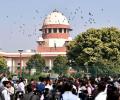
Counsels for AgustaWestland VVIP chopper scam accused Christian Michel and fugitive diamantaire Nirav Modi were also the potential targets of Israeli spyware Pegasus.

The government and the ruling Bharatiya Janata Party have dismissed the Pegasus Project reports as concocted and evidence-less.

This is the first reshuffle in the Council of Ministers by Prime Minister Modi since he assumed charge for a second term in May 2019.

There was an environment of "indifference" towards the use of technology in governance before 2014 due to which the poor and the middle class suffered the most, Prime Minister Narendra Modi said on Friday. He asserted the current government has ensured last-mile delivery of services with the help of technology, including drones. Addressing a gathering after inaugurating India's biggest drone festival in Delhi, he said, "At a time when we are celebrating Azadi ka Amrit Mahotsav, it is my dream that everyone in India should have a smartphone in his or her hand, every farm should have a drone and every house should have prosperity." The enthusiasm being seen in India about drone technology is amazing and indicates possibilities of an emerging sector of employment generation, the prime minister said.
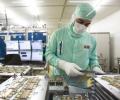
Mumbai-based Indian Semiconductor Manufacturing Company (ISMC) and Singapore-headquartered IGSS Ventures have one strategy in common: They have told the government in their application for semiconductor fabrication plants that they will export the bulk of the chips they make in India in the initial five or 10 years. The third applicant, Vedanta-Foxconn, which is also building a fab plant, has said it will concentrate on the needs of consumer electronics and mobile device markets, and earmark 80 per cent of output for domestic consumption, but has not specified its customers. Finding a viable domestic market could well be the biggest challenge for India's renewed tryst with semiconductors. Fab plants do not sell directly to end users but to intermediary chip design companies - such as Qualcomm or MediaTek.

The Delhi Commission For Women on Monday asked the police officials to appear before it later this week in connection with a probe into objectionable content on 'Bulli Bai' and 'Sulli Deal' apps.

Indian plants -- who plan to begin production with 28 nano metre chips -- will take two to four years to get off the ground. By that time, in the fast changing world of chip making, the global market would have shifted to 22 nm.

'Because of the callous attitude of the railway administration, they don't take care of safety.'

The demand for Tharoor's removal comes days after the Parliamentary Standing Committee on Information and Technology was set to question government officials on the Pegasus spyware issue.

Parliament proceedings were adjourned for the day following disruptions by Opposition parties which raised slogans on the Pegasus snooping row and the farmers' issue by gathering in the Well of the House.

Rahul said that if you ask the BJP why a train accident happened, they will say the Congress Party did such and such thing 50 years ago, taking a swipe at the government following the Odisha train accident, one of the worst railway tragedies in the country.

It came as a surprise to all stakeholders - competing telecom companies (telcos), most analysts and even the government's internal projections on revenues from the 5G auctions. Reliance Jio disrupted all calculations by paying a stiff Rs 40,000 crore to buy 10 MHz of spectrum in the 700-MHz band, globally considered a key band for efficient 5G service coverage, along with the default 3.5 GHz band and the ultra-high speed and low-latency millimetre band of 26 GHz band. So what made Jio pay almost 45 per cent of its total spend in this auction for the 700 MHz band - much more than what it rustled up even for the 3.5 GHz band?
